



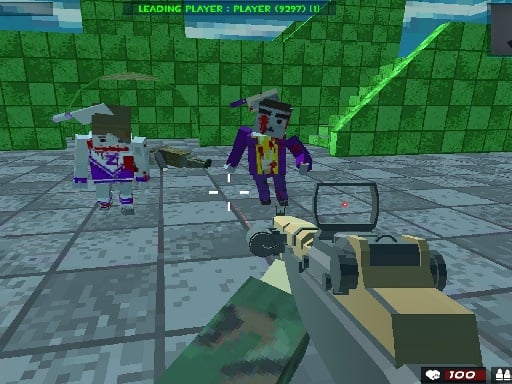



















Crazy gamea games are chaotic physics experiments where players manipulate unstable objects. Often the core loop involves rapid trial and error to succeed in unpredictable scenarios. Players must adapt to shifting physics and bizarre outcomes during every attempt. The genre relies on physics games mechanics to create emergent gameplay.
Immediately engage with the environment by selecting an object and applying force, then observe the resulting chaos, adjust your approach, and try again until the goal is met, using chaos games as your guide.
Players start by assessing the chaotic scene and choosing an initial action, aiming to trigger a chain reaction that leads to the objective. The primary mechanic involves interacting with physics-based elements, where momentum and collision dictate the outcome, requiring constant adjustment to the unpredictable environment. Success is measured by achieving the goal despite the inherent instability, often through repeated attempts and learning from each failure to refine the approach in ragdoll games and funny games.
Focus on small, precise inputs to avoid overcomplicating the physics simulation. Remember that patience is key, as rushing often leads to unintended consequences. Analyze the environment before acting to identify stable points for interaction. Use the arcade games mindset to accept failure as part of the learning process.
Q: What are the typical controls? A: Interactions are usually object-based, involving selection and application of force without specific input methods.
Q: What is the main objective? A: The objective is to achieve a specific outcome in a chaotic physics simulation.
Q: Is there a story? A: Not stated, the focus is on physics-based interaction and emergent results.
Q: What defines the core mechanic? A: The core mechanic is manipulating unstable physics objects to create desired outcomes.