

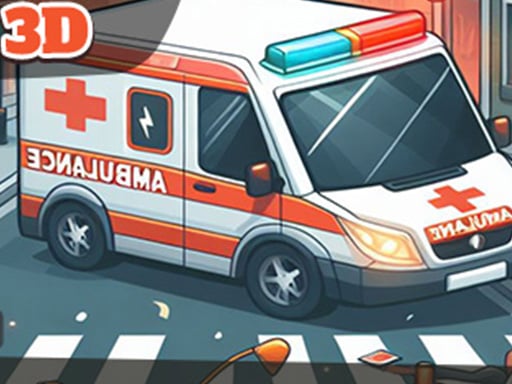

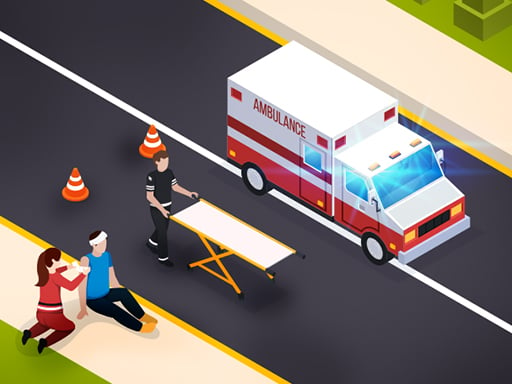

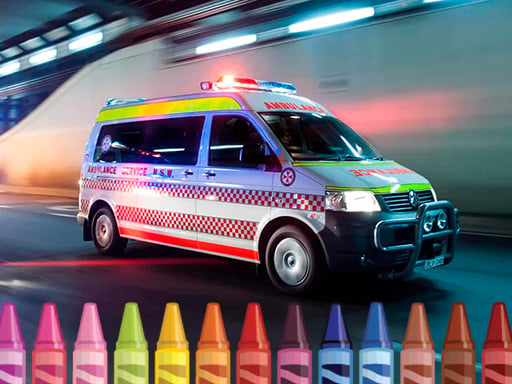
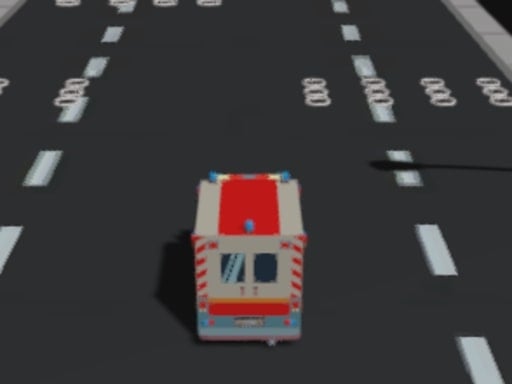
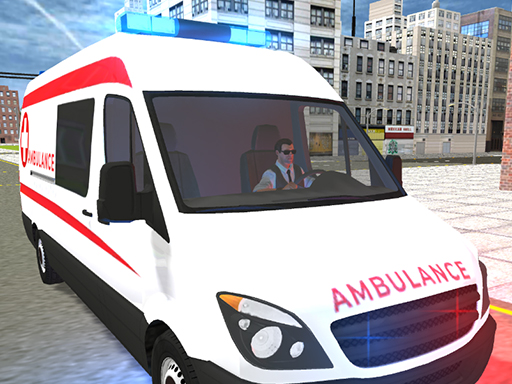

















Ambulance games focus on emergency response scenarios where players operate rescue vehicles through traffic. The player must navigate urban environments to reach accident sites quickly. Gameplay often involves managing time and avoiding collisions with other cars. These titles are popular ambulance driving games for their urgent pace.
Players use simple controls to steer the ambulance, accelerate, and brake while reaching the destination, Immediately collect patients and deliver them to the hospital, and avoid obstacles, and manage the timer. This describes the core loop of emergency response games.
The core objective is to drive the ambulance to accident locations, pick up patients, and transport them to the hospital safely. Players must navigate through city streets, obeying traffic signals and avoiding other vehicles to maintain speed and prevent delays. Success is measured by the number of patients saved within the time limit, requiring efficient routing and careful driving. This defines the standard mechanics found in rescue vehicle games and medical transport games.
Focus on learning the map layout to find the fastest routes between spawn points and hospitals. Remember to use the siren to clear traffic but do not rely on it to prevent all collisions. Prioritize picking up the closest patient first to maximize time for later runs. Practice smooth steering to avoid spinning out or hitting obstacles, which wastes valuable seconds.
Q: What are the typical controls? A: Controls usually involve steering, acceleration, and braking inputs to navigate the vehicle.
Q: What is the main objective? A: The main objective is to transport patients to the hospital before time expires.
Q: Is there a specific feature mentioned? A: Not stated.
Q: What is the primary mechanic? A: The primary mechanic is driving and navigation through traffic.